
Docs / Integrations
Cursor - Agent
A service account with admin access is required to connect Cursor to Corma with the Agent
With the Agent connected to Cursor, you can:
Collect license types: retrieve every Cursor licenses used by your employees, and have them listed in Corma by types, which are either Hobby, Pro, Pro+, Ultra, Teams or Enterprise licenses. Get valuable insights on who is using what in your company to quickly make sure everyone has the appropriate Cursor license at the right time.
License (de)provisioning: automatically create or delete Cursor accounts from Corma without going manually to your Cursor workspace. The agent now automatically handles these tasks, fully on its own, and without needing any SCIM or any public API either.
Retrieved data: License Type, License Role, Email, Username, Plan type
Here’s how to setup your Cursor Agent properly:
On your Corma app go to the Data sources page
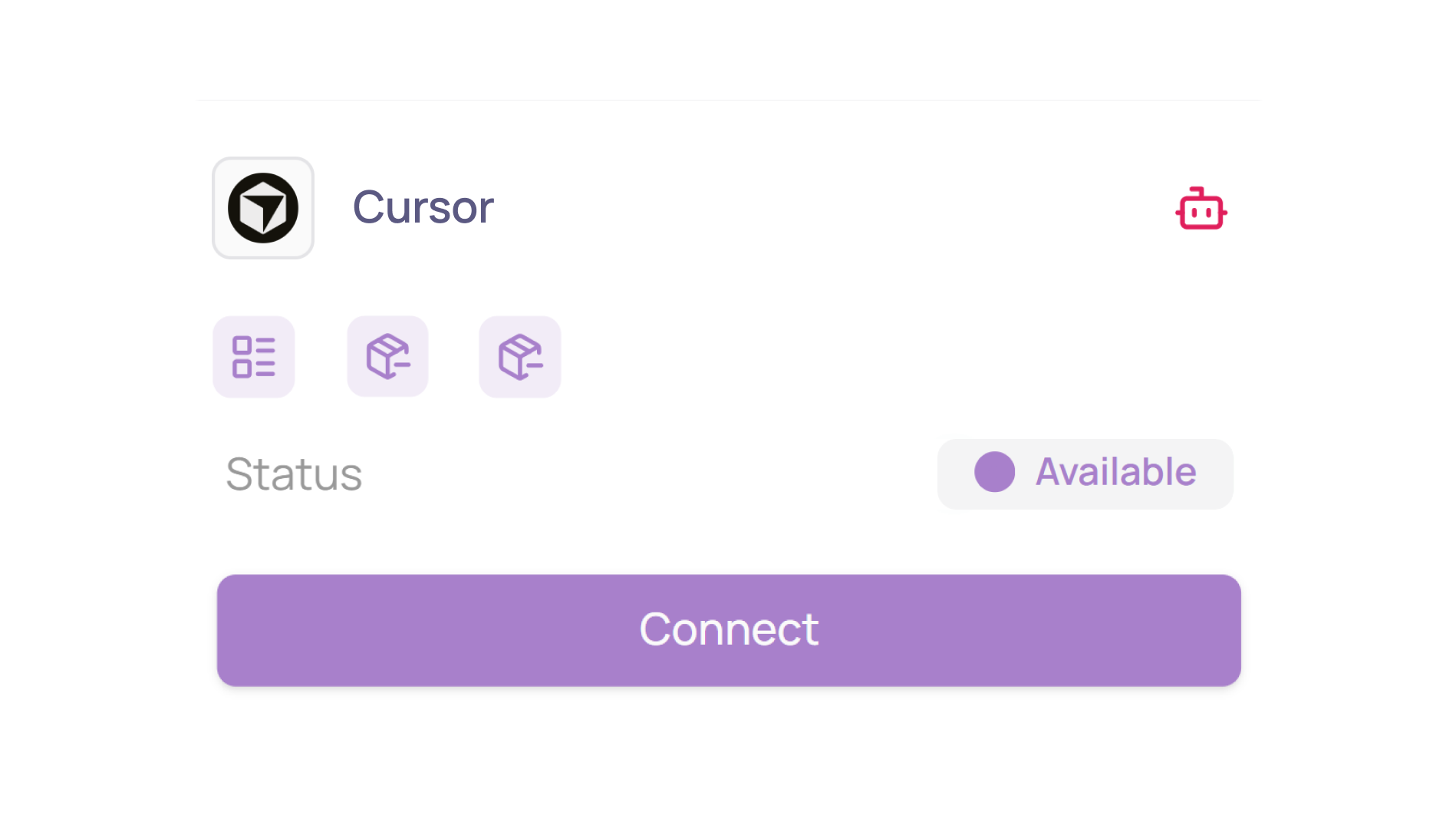
Under "All data sources" search for “Cursor” and find the one with the agent icon. Then click on “Connect”
Click on "Connect" again
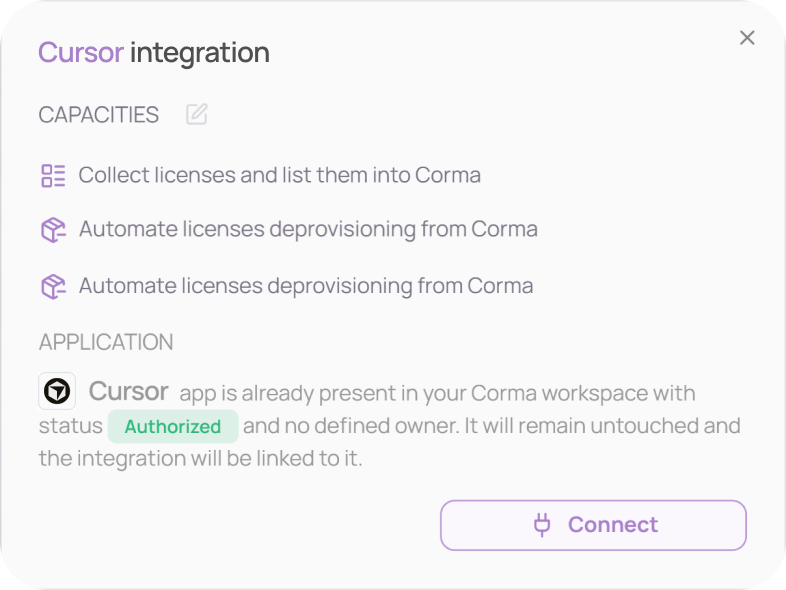
Select your authentication method
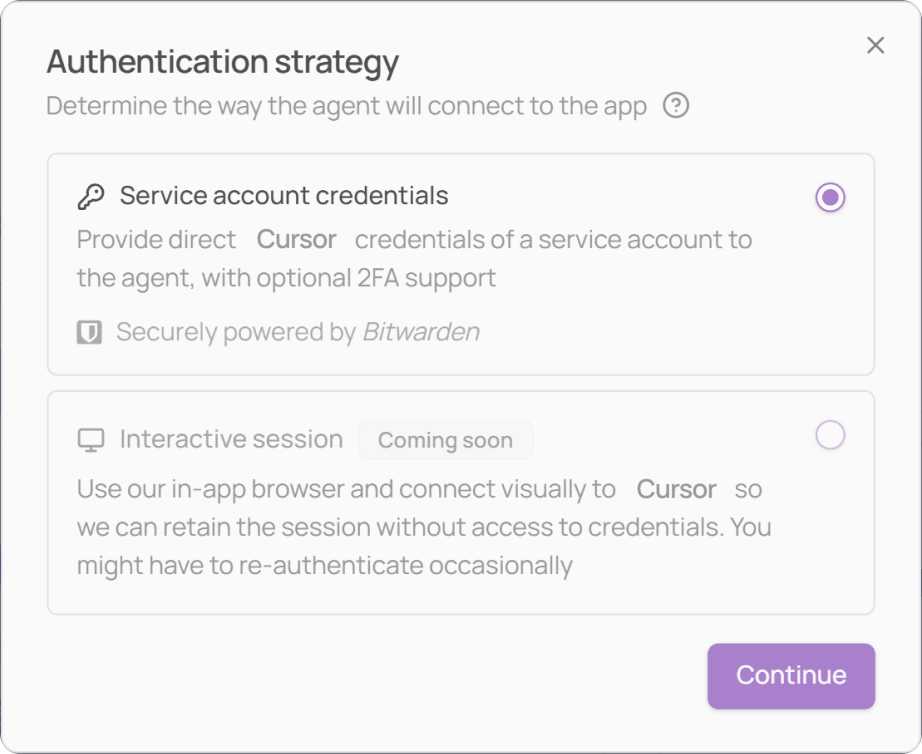
Method 1: provide your credentials for autonomous agent integration
Provide Corma with your Curosr service account credentials directly (that must have admin rights). Corma will handle the login automatically, including TOTP-based 2FA codes (e.g., Google Authenticator).
Method 2: manually connect to let us save your session temporarily
Corma opens an embedded browser where you log in manually, using your Cursor service account credentials (with admin rights). Your session is then saved and the agent acts on your behalf within that session.
Method 1: Service account credentials
Use this if your service account uses:
An email address and password
A "Sign in with Google", as long as you have the underlying Google account credentials.
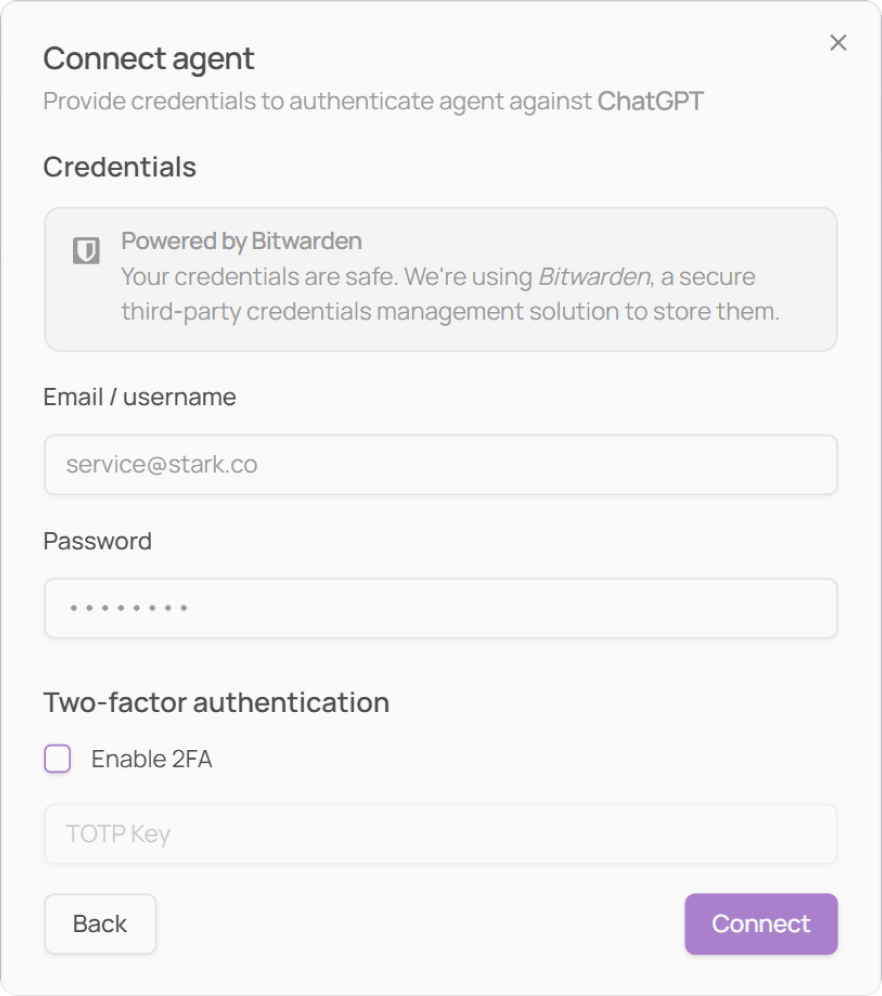
Optionally, a TOTP-based authenticator app (Google Authenticator, Authy). You'll then need to provide Corma with your TOTP key for the agent to get access to your one-time generated passwords.
Enter your Cursor service account credentials in the fields provided (email, password) and click on “Connect“ (Cursor doesn’t natively support 2-factor authentication)
If the login fails or redirects to a company SSO page, switch to Method 2.
Confirm that the Agent successfully logs in
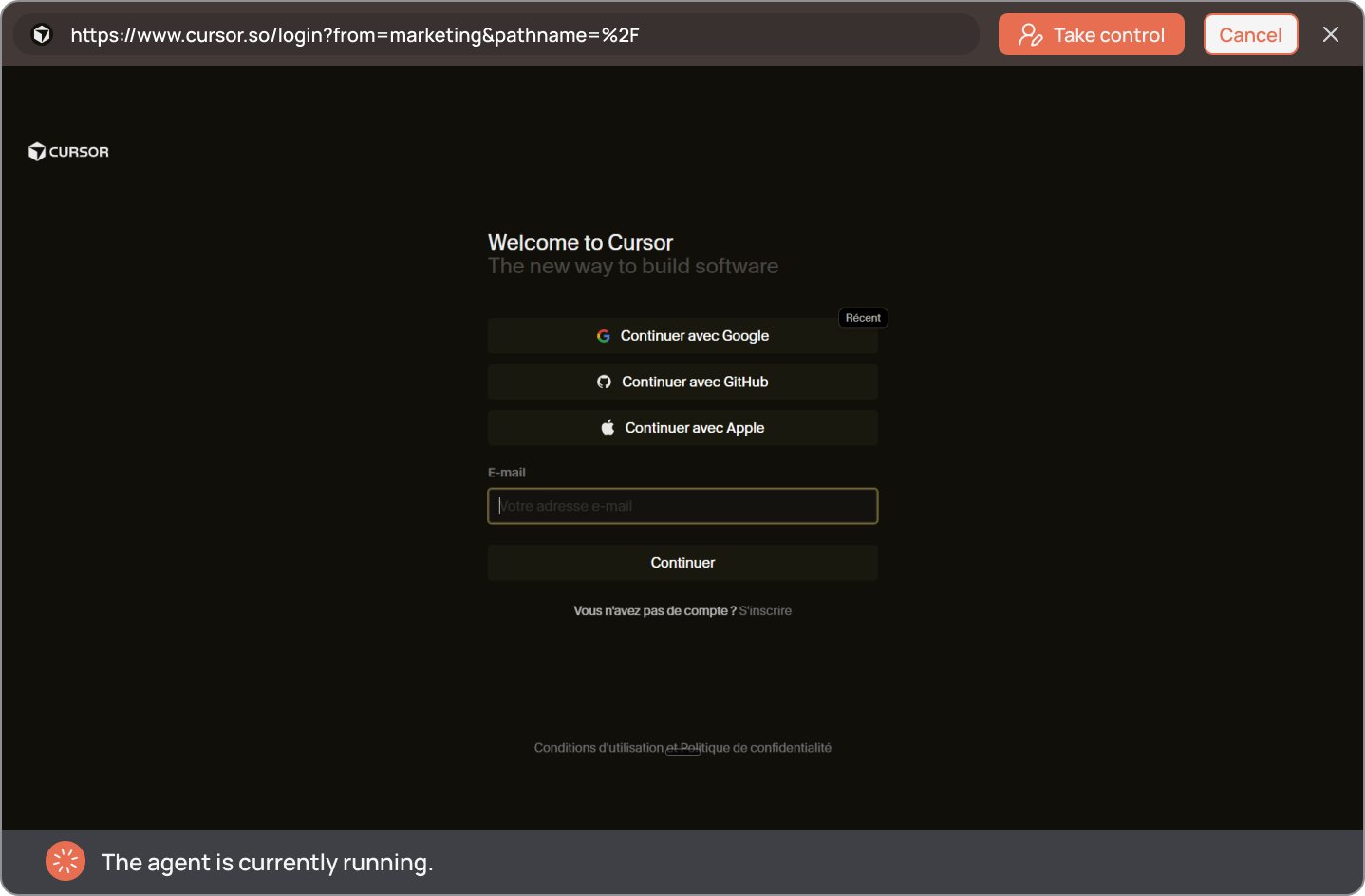
A browser will pop up, with the agent automatically starting to log in to Cursor using the service account credentials. The first agent login takes some time.
You can click on “Take control” at any time to stop the run, and manually interact with the browser. You can then resume at any time, clicking on the same button now showing “Resume”.
You can also click on “Cancel” to stop the agent completely. You’ll be redirected to the “Authentication Strategy” card.
If for some reason the agent can’t log in, you’ll be asked to manually enter your credentials and log in.
Once the agent is successfully logged in, you then need to click on “Validate login”.
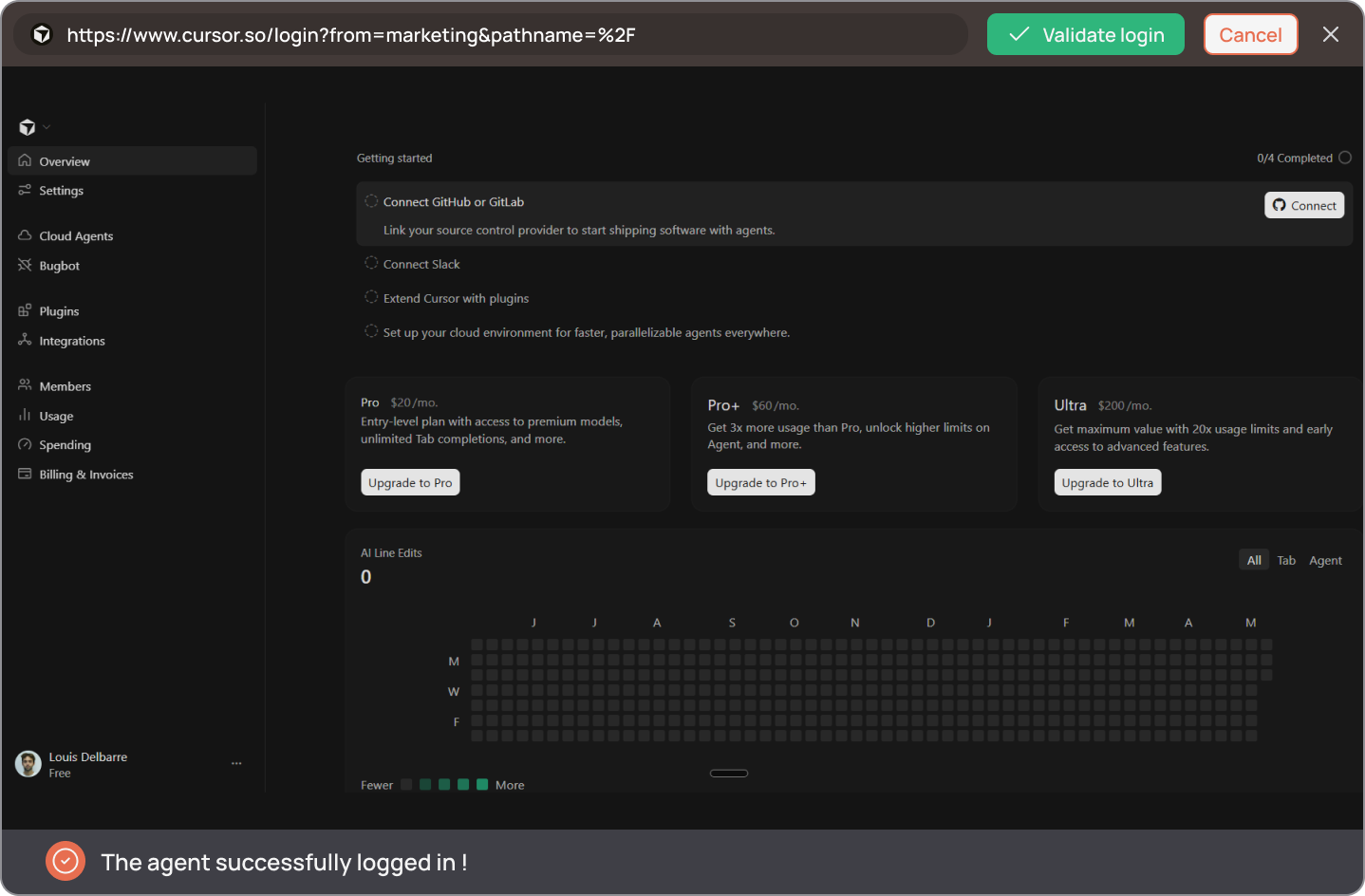
You’ve successfully connected Cursor to Corma!
Method 2: Interactive session
Disclaimer: this method only saves your session. Therefore, if the session expires, Corma will ask you to connect manually again.
Use this if your service account uses:
Enterprise SSO (Okta, Azure AD, Google Workspace SAML, etc.)
Microsoft SSO, especially if unexpected pop-up windows appear
Email-based 2FA (one-time codes sent to your inbox, you'll need to enter these during the manual login)
No password at all (SSO-only accounts)
Corma will open an embedded browser window. Log in to Cursor as you normally would using your service account, including any SSO flow or email verification your company requires.
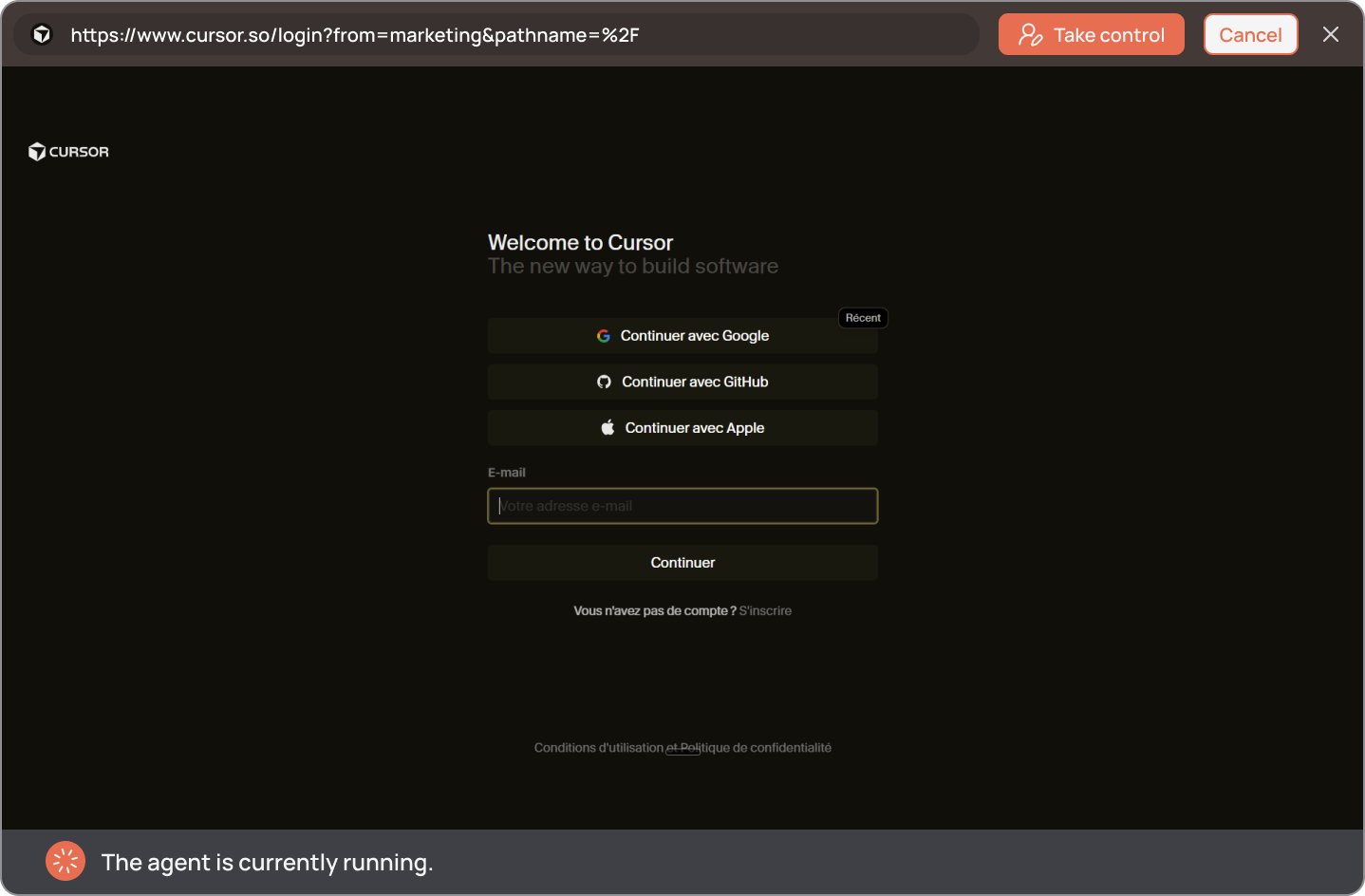
Once you successfully logged in, click on “Validate login”
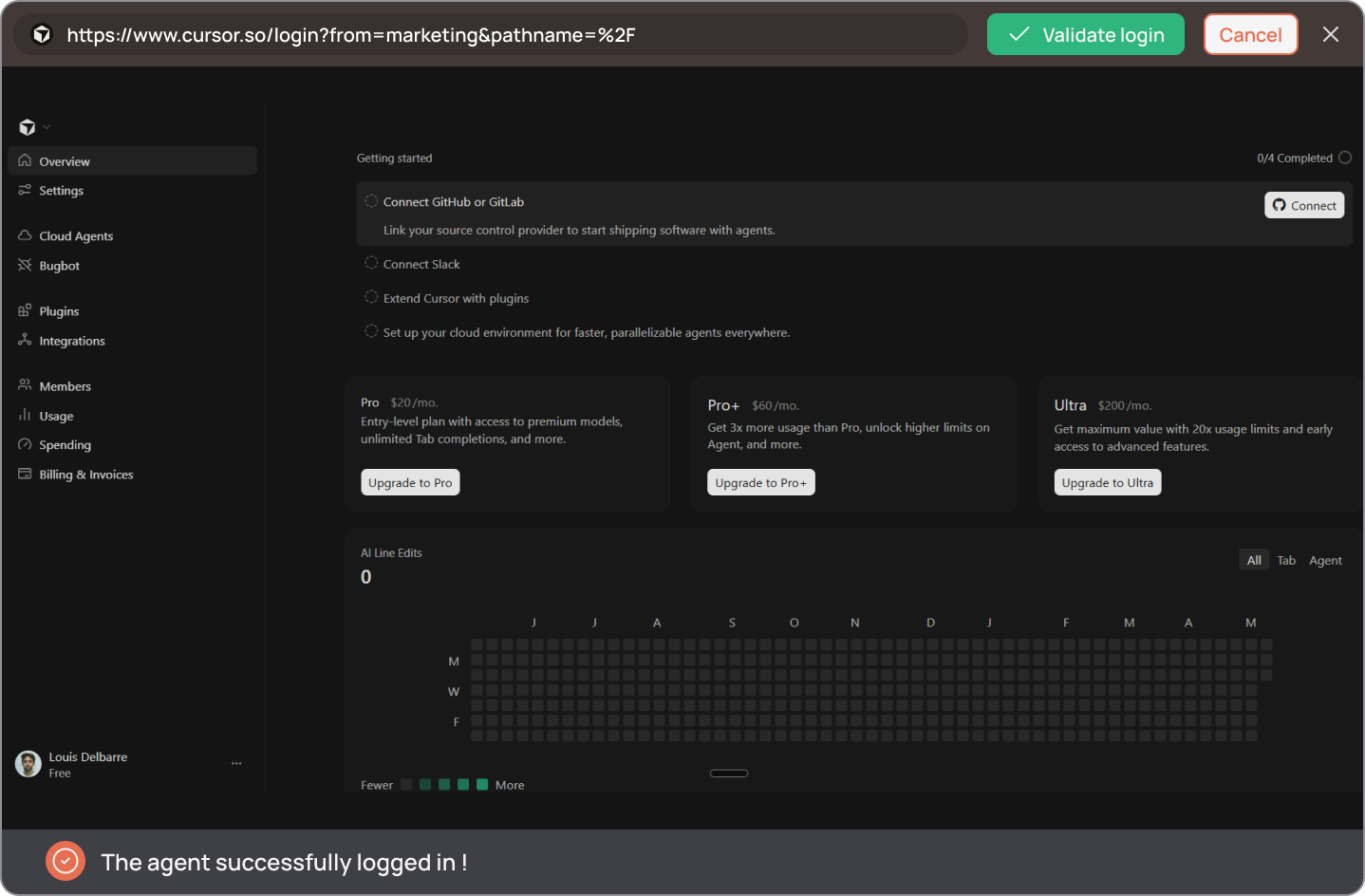
You’ve successfully connected Cursor to Corma!
Data should be synchronized within the next 24 hours and will be synched every day to your Corma app.
Was this helpful?